1. What Is 4-Ethenylphenol Acetate?
4-Ethenylphenol Acetate, also known as 4-Acetoxystyrene or 4-Vinylphenyl Acetate, is an aromatic organic compound used as a building block in polymer chemistry and functional material research. Its CAS Registry Number is 2628-16-2.
The molecule contains a vinyl group attached to an aromatic ring and an acetate-protected phenolic oxygen. This combination makes 4-Ethenylphenol Acetate relevant to researchers developing functional polymers, specialty resins, and materials requiring controlled chemical modification.
Unlike compounds containing a free phenolic hydroxyl group, 4-Ethenylphenol Acetate has its phenolic oxygen protected by an acetate group. This structural feature can provide additional flexibility in synthetic route design.
For chemical manufacturers, material developers, and R&D teams, understanding its molecular structure, polymerization behavior, and potential applications is essential when evaluating this monomer for a specific formulation.
2. Key Chemical Information
The following table summarizes the main identification data for 4-Ethenylphenol Acetate.
Property | Information |
Product name | 4-Ethenylphenol Acetate |
Common name | 4-Acetoxystyrene |
Alternative name | 4-Vinylphenyl Acetate |
CAS Number | 2628-16-2 |
Molecular formula | C10H10O2 |
Molecular weight | 162.19 g/mol |
Chemical class | Aromatic vinyl ester |
Key functional groups | Vinyl group and acetate ester |
Primary research relevance | Functional monomers and advanced polymer synthesis |
The molecular formula and molecular weight are consistent with the chemical records published by PubChem and the NIST Chemistry WebBook.
When sourcing 4-Ethenylphenol Acetate, buyers should verify the CAS number alongside the product name to avoid confusion with structurally related vinylphenol compounds.
3. How Does 4-Ethenylphenol Acetate Work in Material Synthesis?
The value of 4-Ethenylphenol Acetate comes from its two important structural features.
3.1 Vinyl Functionality for Polymerization
The vinyl group can participate in suitable addition-polymerization reactions. Depending on the selected reaction conditions and formulation, 4-Ethenylphenol Acetate can be evaluated as a monomer or comonomer for preparing polymers with tailored chemical structures.
Researchers may investigate its incorporation into polymer systems to adjust composition, functional-group distribution, and subsequent chemical modification options.
3.2 Acetate Protection for Functional-Group Control
The acetate group masks the phenolic hydroxyl group that would otherwise be present in 4-vinylphenol.
Under appropriate deprotection conditions, the acetate group can be removed to generate phenolic functionality. This provides a possible route for preparing polymers or intermediates that contain phenolic groups for further modification.
The suitability of this approach depends on polymer composition, reaction compatibility, deprotection conditions, and the stability of the target material.
3.3 Why Molecular Structure Matters
For advanced material development, the combination of polymerizable functionality and a protected phenolic group offers synthetic flexibility.
However, actual performance depends on molecular weight, conversion, residual impurities, formulation design, and processing conditions. These factors should be evaluated experimentally rather than inferred from the monomer structure alone.
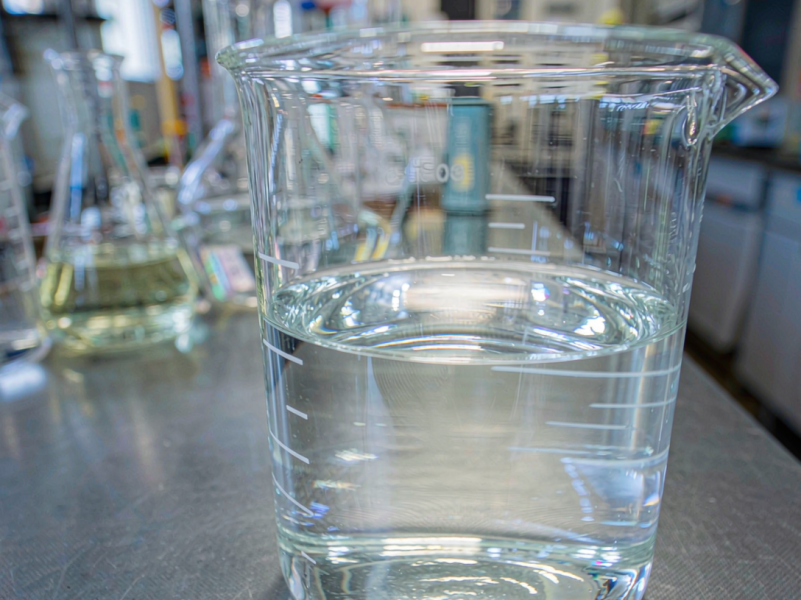
4. Four Potential Application Areas of 4-Ethenylphenol Acetate
Application 1: Functional Polymer Synthesis
Functional polymer synthesis is an important area in which 4-Ethenylphenol Acetate may be evaluated.
Its vinyl group supports consideration in polymerization research, while the protected phenolic group provides an option for subsequent chemical transformation.
Potential research directions include:
Functional copolymers
Specialty polymer intermediates
Polymers with post-polymerization modification requirements
Materials requiring controlled introduction of phenolic functionality
For polymer manufacturers, the key evaluation criteria include monomer purity, polymerization compatibility, reaction conversion, and the properties of the resulting polymer.
Application 2: Specialty Resins and Coating Materials
4-Ethenylphenol Acetate may also be investigated as a building block for specialty resin and coating development.
After polymerization and, where appropriate, deprotection, the resulting materials may contain functional groups that influence interactions with other formulation components or substrates.
Potential development areas include:
Functional resin systems
Specialty coating intermediates
Polymer surface modification
Research into adhesion-related material properties
It is important to distinguish potential applications from verified end-use performance. Adhesion, chemical resistance, thermal stability, and coating durability must be established using the final formulation and relevant test methods.
Application 3: Electronic Materials and Photoresist Research
Electronic materials are another relevant research area for functional aromatic monomers.
The ability to incorporate specific functional groups into polymer structures can be useful when developing materials for demanding electronic applications. In particular, the protected phenolic functionality of 4-Ethenylphenol Acetate may be of interest in research involving polymer modification and specialized resin chemistry.
Potential investigation areas include:
Functional polymers for electronic material development
Specialty resin intermediates
Polymer systems requiring controlled functional-group introduction
Research into photoresist-related material chemistry
Important qualification: 4-Ethenylphenol Acetate should not automatically be described as a standard commercial photoresist ingredient. Its suitability for a particular photoresist formulation depends on the resin architecture, lithographic requirements, purity specifications, and experimental validation.
For semiconductor-related applications, buyers should establish the required impurity profile and analytical specifications before selecting a supplier.
Application 4: Specialty Chemical Intermediates
Beyond polymer materials, 4-Ethenylphenol Acetate can be considered in synthetic research where both aromatic vinyl functionality and a protected phenolic group are useful.
Its potential role as an intermediate depends on the intended reaction pathway and compatibility with the downstream synthesis.
Relevant evaluation areas include:
Multi-step organic synthesis
Functional aromatic compound development
Protected phenol chemistry
Research-scale preparation of specialized materials
For chemical R&D teams, the main consideration is whether the compound offers a suitable combination of reactivity, functional-group protection, and compatibility with the planned synthetic route.
5. What Should Buyers Check When Sourcing 4-Ethenylphenol Acetate?
Selecting an appropriate supplier involves more than matching a chemical name. For research and industrial applications, buyers should evaluate several technical and commercial factors.
Chemical Identity and Purity
Confirm the CAS number, molecular identity, stated purity, and analytical documentation. Depending on the application, relevant analytical methods may include GC, HPLC, NMR, or other suitable techniques.
Polymerization Inhibitor Information
Vinyl-functional monomers may be supplied with polymerization inhibitors. Buyers should confirm whether an inhibitor is present, its identity and concentration, and whether the specification is compatible with their intended process.
Inhibitor requirements should be discussed before ordering because they can affect downstream reaction planning.
Storage and Transportation
Request the supplier's current safety data sheet (SDS), recommended storage conditions, packaging information, and applicable transportation requirements.
Storage recommendations should follow the product-specific documentation rather than assumptions based on related compounds.
Batch Consistency and Documentation
For repeated procurement, buyers should consider:
Certificate of Analysis (CoA)
Batch-to-batch consistency
Impurity specifications
Packaging and labeling
Availability of technical documentation
Sample availability and lead time
For high-purity electronic material research, additional impurity limits may be necessary. These should be agreed upon explicitly rather than assumed to be included in a standard grade.
6. Frequently Asked Questions About 4-Ethenylphenol Acetate
Q1: What is the CAS number of 4-Ethenylphenol Acetate?
The CAS Registry Number of 4-Ethenylphenol Acetate is 2628-16-2. It is also commonly known as 4-Acetoxystyrene or 4-Vinylphenyl Acetate.
Q2: What is the molecular formula of 4-Ethenylphenol Acetate?
Its molecular formula is C10H10O2, and its molecular weight is approximately 162.19 g/mol.
Q3: Is 4-Ethenylphenol Acetate the same as 4-Acetoxystyrene?
Yes. 4-Acetoxystyrene is a commonly used synonym for 4-Ethenylphenol Acetate. The compound is also listed as 4-Vinylphenyl Acetate in chemical reference databases.
Q4: What is 4-Ethenylphenol Acetate used for?
It can be evaluated for functional polymer synthesis, specialty resin development, protected phenol chemistry, and research into advanced materials. Specific applications depend on the synthesis route and performance requirements of the final material.
Q5: Can 4-Ethenylphenol Acetate be used in photoresist development?
It may be investigated in relevant polymer and specialty resin research. However, its suitability for a particular photoresist formulation must be established through technical evaluation and experimental validation.
Q6: What is the difference between 4-Ethenylphenol Acetate and 4-Vinylphenol?
The main difference is the phenolic functional group. In 4-Ethenylphenol Acetate, the phenolic oxygen is protected by an acetate group. In 4-Vinylphenol, the hydroxyl group is free.
Q7: What information should I provide when requesting a quotation?
Buyers should specify the product name, CAS number, required purity, quantity, inhibitor requirements, intended application, packaging preferences, and destination country. Any additional analytical or impurity requirements should also be included.
7. Source 4-Ethenylphenol Acetate for Your Material Development
For companies and research teams evaluating 4-Ethenylphenol Acetate (CAS 2628-16-2), selecting a supplier that understands chemical specifications and downstream application requirements is an important step in procurement.
UIV CHEM serves customers in specialty chemicals and functional material markets. Buyers interested in this compound can contact the UIV CHEM team to discuss product specifications, available documentation, quantity requirements, and application-related needs.
When submitting an inquiry, please include your target purity, required quantity, inhibitor specification, and intended use so that the product requirements can be evaluated more efficiently.
Contact UIV CHEM to inquire about 4-Ethenylphenol Acetate and discuss your sourcing requirements.
Ready to Accelerate Your Research?
For technical datasheets, sample requests, or customized catalyst solutions, contact the UIV CHEM technical support team today. Let us help you achieve breakthrough results in organic synthesis and materials innovation!
评论
发表评论